

A Conversation with SSU’s Bee Partners: The People Behind the Honey
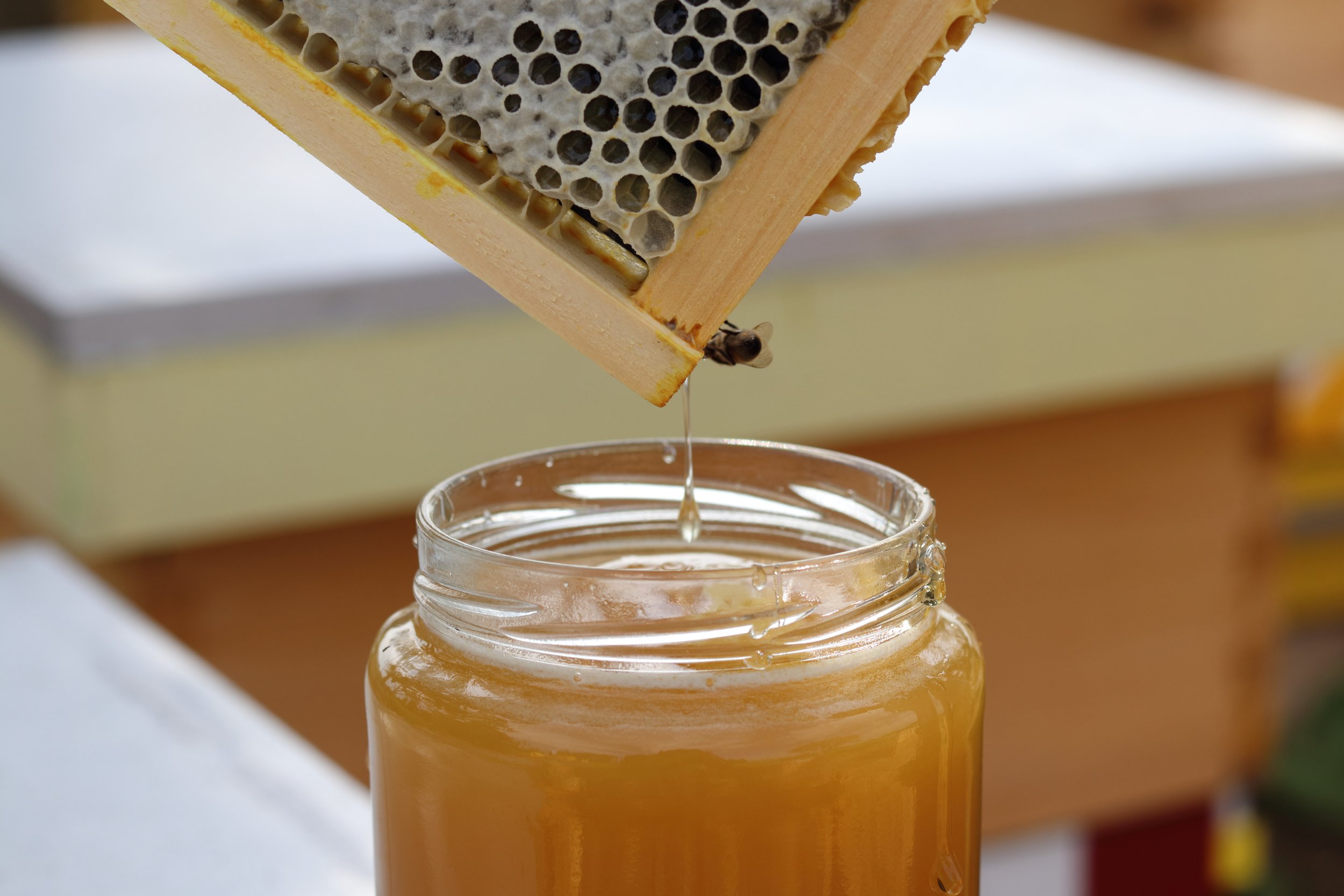
Behind every jar of honey is a much bigger story - one of pollination, biodiversity, community, and the people who dedicate their work to supporting it. As SSU’s bee partners, Dave and Vincent of Backed by Bees are helping bring that story to life on (and beyond) our campuses. Their work goes far beyond producing honey and mead; it’s about creating a stronger connection between people, food, and the natural world.
From managing hundreds of hives across Southern Ontario to creating mead recipes and partnering with local organizations, their days look different depending on the season, but the purpose remains the same: working alongside bees to create a healthier and more connected ecosystem. In our conversation, Dave and Vincent shared how they found their way into the world of bees, what they've learned from these remarkable pollinators, and how Sheridan College students and adjacent communities can play a role in supporting them.
What does a typical day look like for each of you?
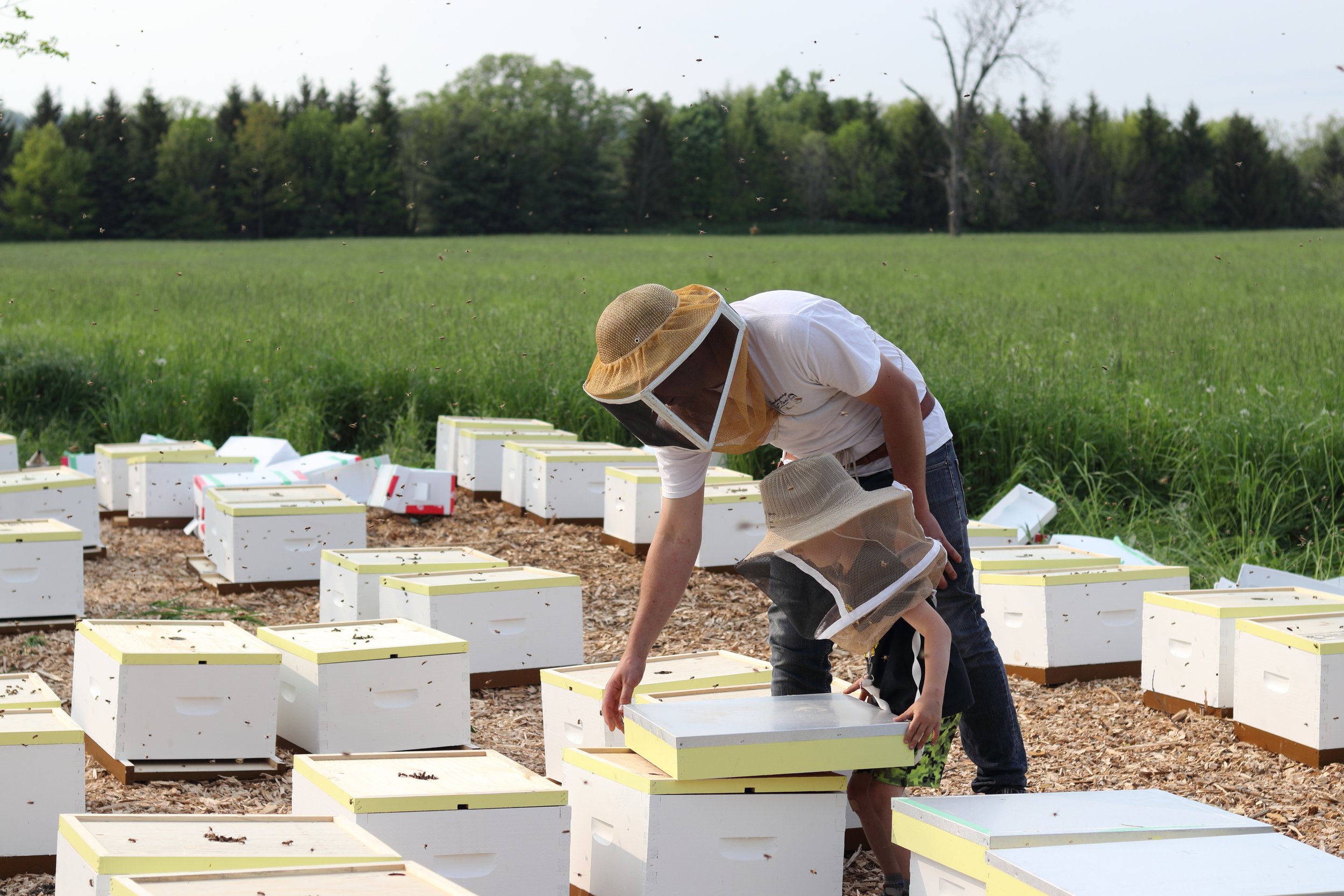
Dave: “It's hard to answer because it depends so much on the season and the honey bee life cycle. Right now, a typical day starts with loading the truck with all the equipment and heading out to our outyards. We can only keep about 30 hives per three square kilometres, so we're hopping from farm to farm, or college to college, wherever the bees are. You might see a couple hundred hives in a day, making judgment calls on colony health and helping reduce risks as you go. You start with a plan, like adding honey boxes or dividing colonies, but it rarely goes exactly to plan. You also work with the weather and don't force things on rainy days.”
Vincent: “The mead side is much more planned and methodical. It's closer to making wine or cider than beer. Every week I develop a recipe, thinking about the food science, how the flavours will come together in the bottle or can, and who we're making it for. Then comes production. Brewing takes half a day to a full day depending on the ingredients. Once it's fermented, there's balancing, like deciding whether to add more sugar. After that, it's packaging, whether that's bottling or canning, plus label design and marketing.”
What's the story behind the name Backed by Bees?
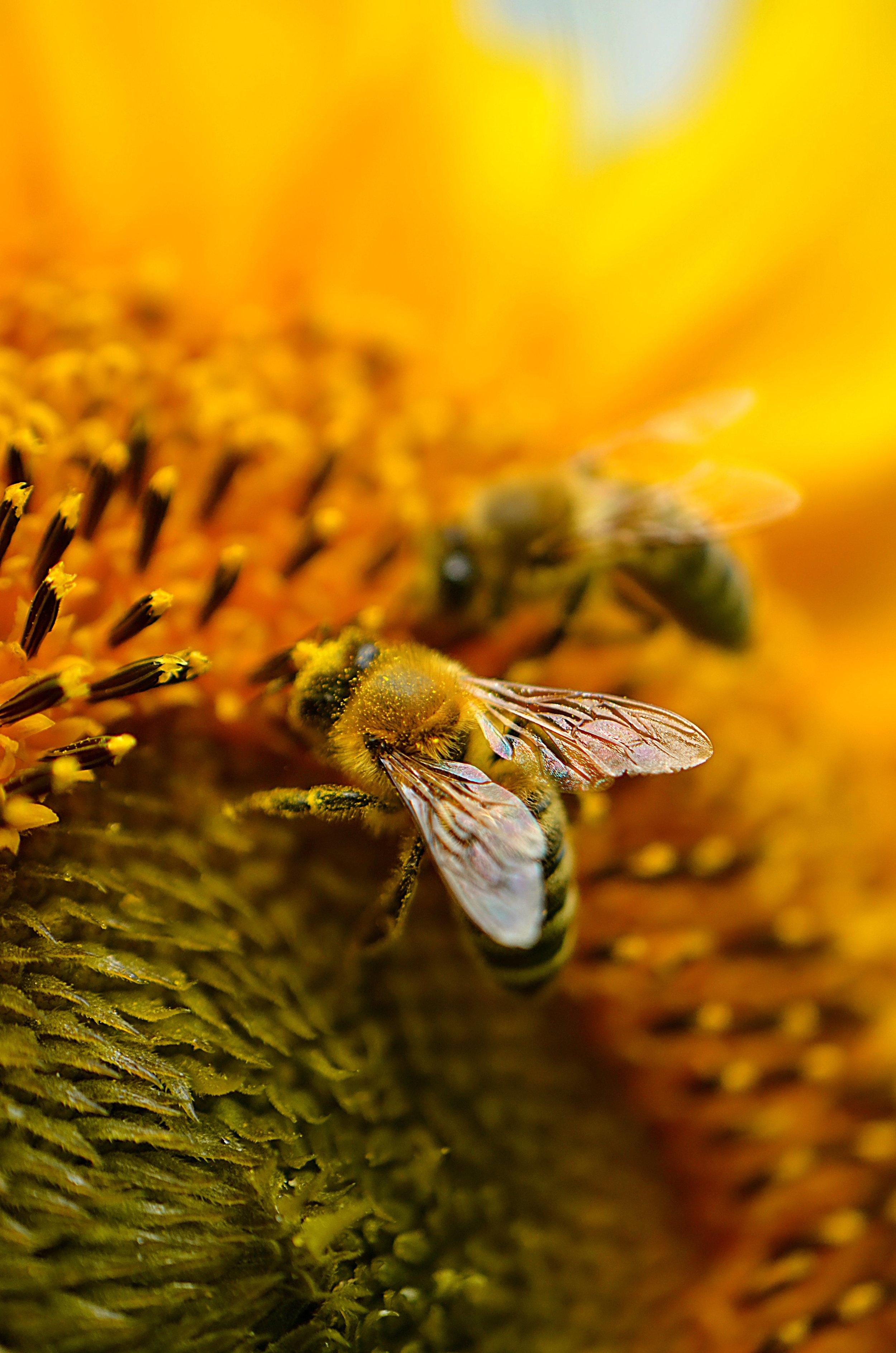
Vincent: “When we started the business, we took the time to come up with a lot of names. We played with historical names based on our own names and tried pushing them together as partners to see if anything worked phonetically. After looking at the business and where we were, the answer came from my finance background. In finance, you're backed by whatever supports you, and for us, the bees are that support. They're the foundation, and they're our workforce. “
Dave: “If you paid every bee minimum wage for the time it takes a hive to produce 500 grams (about a pound) of honey, that jar would cost $185,000.
Vincent: That's how much work the bees are doing, and it's why we see this as a partnership with them. We really are backed by the bees. It also works as a bit of a tagline, and we were fine with that.”
You mentioned hearing that the sound of buzzing bees is calming, even healing. Is there any truth to that?
Dave: “It's pretty neat. For anyone who doesn't like bees, the buzzing is probably nightmare fuel, but it's a fairly low, humming tone, and I've heard it has some healing capacity. One thing I've heard is that it may help with bone regeneration, though I'm not sure what's happening at the biological level, and I'm no expert in that area. I'll be honest, when I started, I didn't believe much of this. I was much more of a numbers-and-data person. But the longer I've been immersed in this world, the more I'm a believer. The worst days can be calmed down just by sitting back and watching the bees work.”
What is the Adopt a Hive program, and what does the process look like?
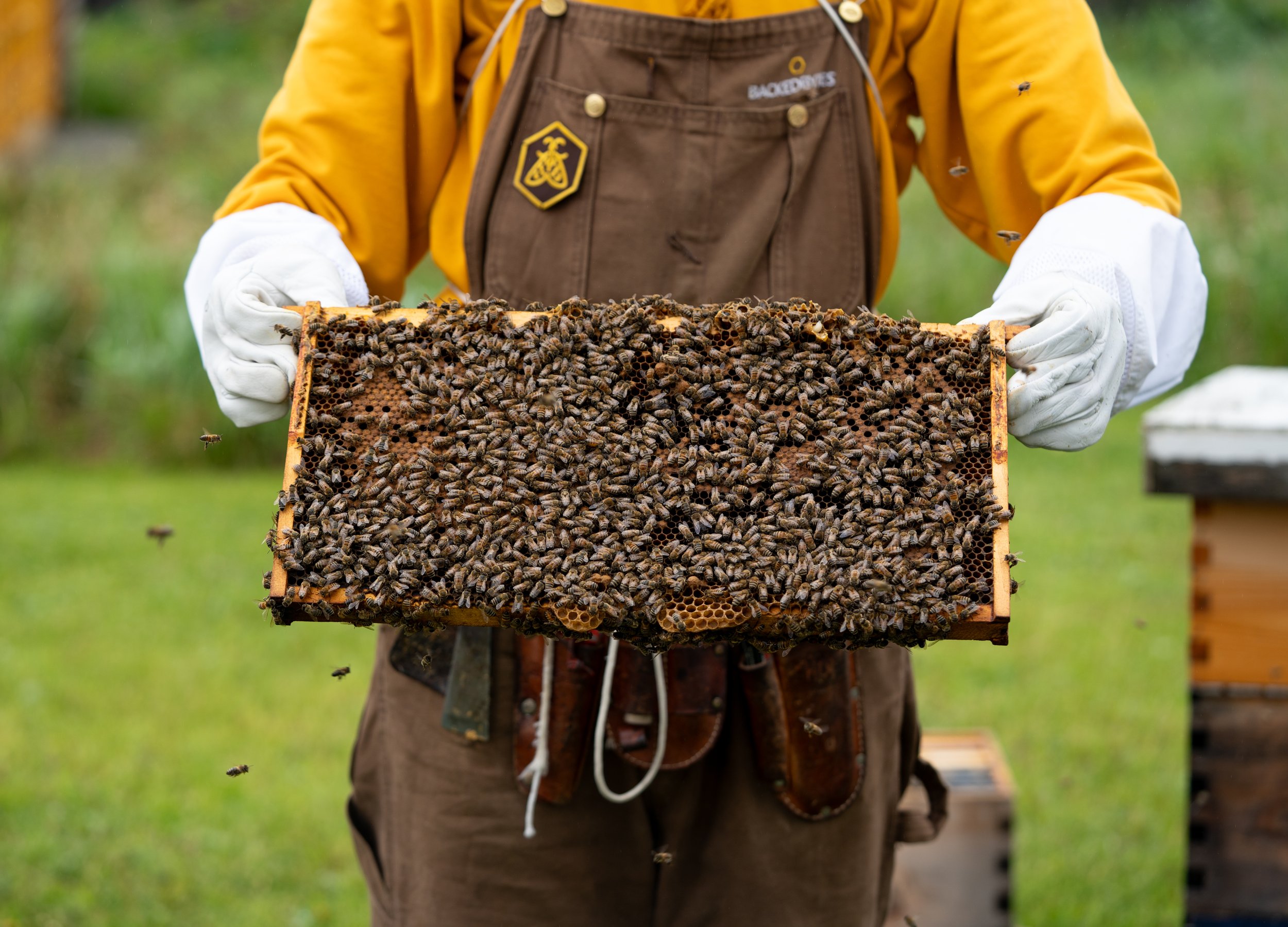
Vincent: “People tend to join for three main reasons. The first is that they want to be in partnership with their food. They want a direct link to where it comes from, and to know that what they're putting in their bodies comes from something they can see and touch. They want to be closer to nature and understand the cycles of how honey is made. They can follow that journey all year through our app, where the hive posts updates, and they're welcome to come out and visit.
The second is learning. Families and students often join to teach their kids about beekeeping and to see what the hive's year looks like.
The third is the honey itself. Some people want a share and want to guarantee they get raw honey, because we sell out every year, and the program is a way to make sure they do.
Beyond that, we want to partner with the bees and with our customers. Adopters get 10% off our entire store as a way of saying you're part of our community now. It's a long-term commitment, so we want to give something back.
Whether you're taking part as a family or a student, wanting a share of the honey, or wanting to partner with nature more deeply, it comes back to those three things.”
What's another fun fact you've discovered while working with the bees?
Dave: “The neatest one is how much they tell you through the pitch of their buzzing. They change the tune depending on the status of their queen, how healthy or unhealthy the hive is, and what's going on in the flower world around them, like whether the flowers are producing lots of nectar and pollen. Once you've spent enough time with them and gotten in tune with them, you can tell a lot about a hive before you even take the roof off. They tell you at the start what you're heading into and what they're dealing with then.”
How can Sheridan students keep supporting Backed by Bees beyond posters, artwork, and workshops?
Vincent: “We always come back to food sources for the bees. It doesn't matter where you live, on campus or off. Even a small balcony with a few plants that bloom through the year makes a real difference. It's not just honey bees, either. There's a whole population of solitary bees out there, and we advocate for both. Honey bees are very important for food pollination, and any forage students can provide helps them. Solitary bees need habitat. You can use one of our solitary bee nests, build your own, or buy one somewhere else, and set it up right outside a dorm or wherever you live. Those two things can have a real impact on your local area.”
What might students not know about beekeeping and mead making, and who might be drawn to this world?
Dave: “Far more fields touch beekeeping than most people realize, from the highly technical to the very hands-on:
Research. The University of Guelph has the largest honeybee research centre in North America. Researchers work on honey bee and pollinator gut microbiomes and nutrition, on pests and whether we can breed resistance to them, and on pharmaceuticals for livestock, including bees.
Agriculture. Anyone growing crops or raising livestock. Livestock benefits indirectly from things like alfalfa pollination.
Trucking. We're constantly moving hives to pollination events. A big one in Ontario is transport trucks loaded with hives and sent to Nova Scotia for wild blueberry pollination.
Woodworking. Our woodenware is natural wood, so woodworkers help support the industry.
Landscape architecture and urban design. Designers are increasingly building green spaces and complexes that are friendlier to nesting pollinators. It's one we maybe don't talk about enough, but the field has really woken up to it.
Conservation. Last one, and not to drone on: conservation authorities and eco-conservation organizations.”
What should you do if you spot a wild beehive, like one in a wall or a tree?
Dave: “Honeybees do best when they're managed properly, and looking after a colony's health can keep it going almost indefinitely. Wild colonies are a problem mainly because of one pest we deal with, a mite. Its population gets out of control fast if it isn't managed. In a wild colony, if the mites get too numerous, the bees can abandon the hive and carry the mites to other colonies within about five kilometres, taking them down too. If you spot a wild hive, the best thing is to identify it, tell a beekeeper and let them deal with it.”
What's your favourite part of working in this industry?
Vincent: “For me it's the evenings. I grew up in the country in Ontario, and at night, when everything is calm, the wind is low and the sun is setting, it's just beautiful. I love watching the ecosystem bounce back on the four acres we've let return to a pollinator paradise, and seeing how vibrant the birds are. Humans need to strike a balance with nature, where we intervene, step back, intervene and step back again. Being part of that journey is the most rewarding part.”
Dave: “It's hard to describe because it's a feeling. If I could bottle it up- and this sounds corny- it would be a jar of honey. I used to see a jar of honey as a great natural sweetener, and it still is. Now I look at it and see millions of flowers pollinated in that one jar. Even on the frustrating days, I can look at it and think, that's what this is all about. I know those bees are working the farms around here and our urban hives, people's backyard and porch gardens. It's real and tangible, and I love that.”
If you could take one positive quality from honeybees, what would it be?
Vincent: “There are so many, but it's their ability to communicate and operate as one unit. Everyone knows their role, and together they build enough resources to survive the toughest times. There's self-sacrifice too. Over winter, they protect their queen, and the cluster can shrink as the outer layers die off and resources run low. Watching that, you see sacrifice and service for the survival of the whole community, which is a message I think gets lost in our society sometimes.”
Dave: “If I had to pick one on the spot, it's that honeybees only take what they need. They're not insects of excess or theft. One bee doesn't indulge in something she doesn't need. I think that's an ethical way to live.”
Where have you found the most value in this journey, and what impact do you hope to have through the partnership?
Vincent: “There are two aspects, because we're also small business owners. There are two founders and a team of about 13 to 17, depending on the season. Personally, the most rewarding part is working with other local businesses in more of a circular economy, getting to know those people, and working with municipal governments, partners like Sheridan, and public partnerships with the city or region. It's a shared experience, and we're working together to benefit everybody. For example, we sell our honey to small business owners for their products, so they don't have to buy from the US or elsewhere in the country. Doing that in a sustainability context makes it even better. That's why we're so excited to partner with Sheridan. We can extend the conversation to your student body, and the impact reaches beyond campus. You're making your community better through this initiative. We want to talk about it authentically, not as greenwashing. We can track how many flowers were pollinated, and you can share that story and say you had a hand in helping balance nature.”
How does service play a role in what you do, and how do you see the partnership serving students and the wider community?
Vincent: “As small business owners, we get up every morning to serve our customers and the people around us. Sheridan is our customer too, and that service is how we create value and how we continue to exist as an organization. It's an ongoing conversation about where the gaps are right now. You've already pointed to wellness and food insecurity, and as the partnership grows, we want to keep supporting those areas. That way we're adding value to what Sheridan needs to achieve its mission and strategic plan.”
For Dave and Vincent, the lessons of beekeeping extend far beyond the hive. Bees demonstrate the importance of communication, cooperation, balance and taking only what is needed. Those same ideas shape Backed by Bees' approach to business, community partnerships and their work to create spaces where pollinators and people can thrive together.
Whether it's planting bee-friendly flowers on a balcony, creating habitat for solitary bees, learning where our food comes from or simply taking a moment to observe a hive, there are many ways to become part of that connection. Through their partnership with Sheridan, Dave and Vincent hope to continue that conversation and inspire students to see how even small actions can contribute to a healthier local ecosystem.
Ultimately, their message is simple: we are all connected to the natural systems that support us. And sometimes, looking closely at the bees is enough to remind us of that.
Want To Try The Honey from Back By Bees?
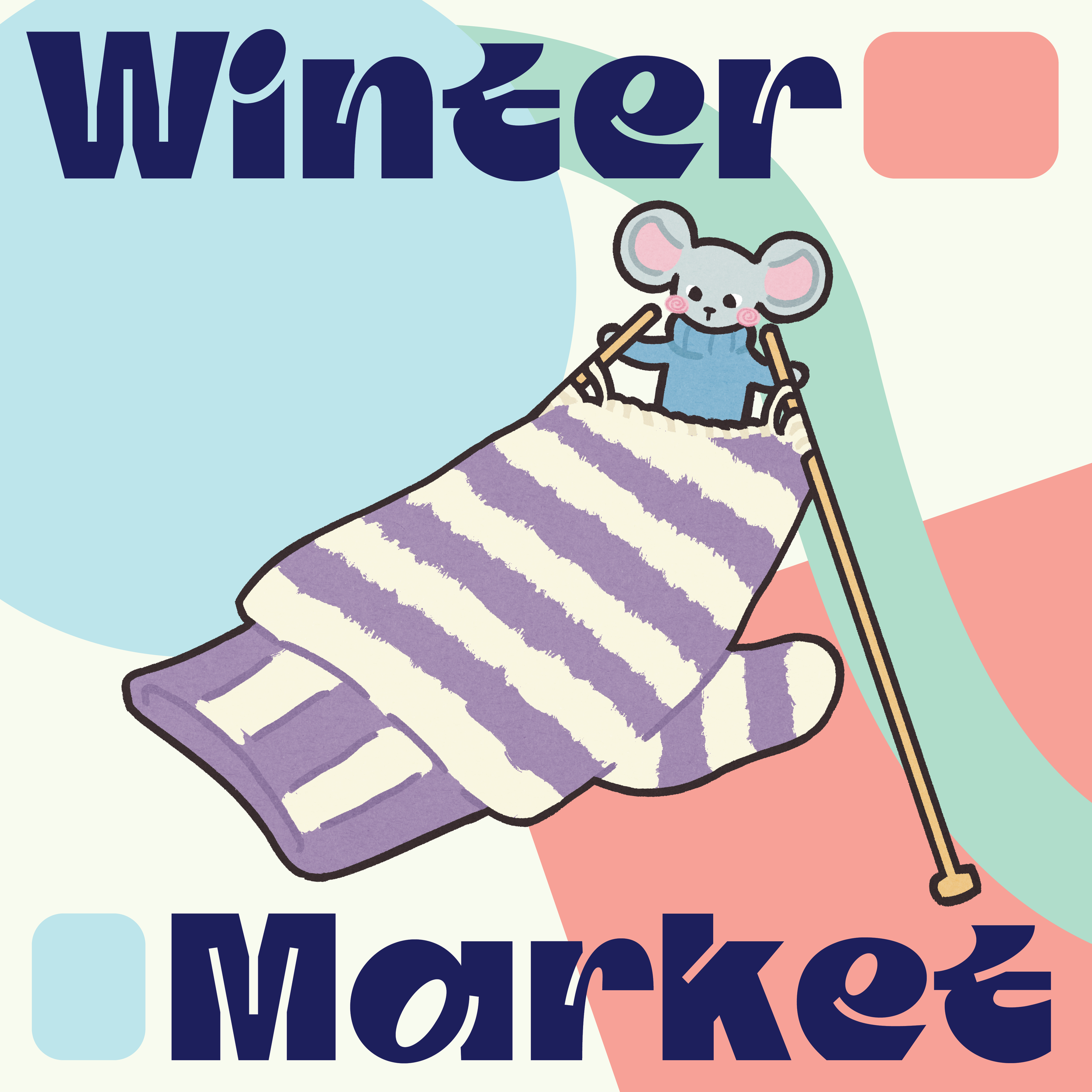
Stop by our first-ever SSU Winter Market across all campuses and enter a raffle for a chance to win exciting goodies from Backed By Bees!
❄️ December 1st at HMC Campus
❄️ December 2nd at Davis Campus
❄️ December 4th at TRAF Campus
More about Back By Bees?
Backed by Bees believes the natural world has much to teach us. As beekeepers and meadmakers, they are continually learning from the flowers, fields, and bees that surround them. Their work is rooted in the belief that nature gives, transforms, and connects us all. Through their work, they aim to create opportunities for people to experience what nature has to offer and make more balanced choices for the future.
Read our other food-related blogs

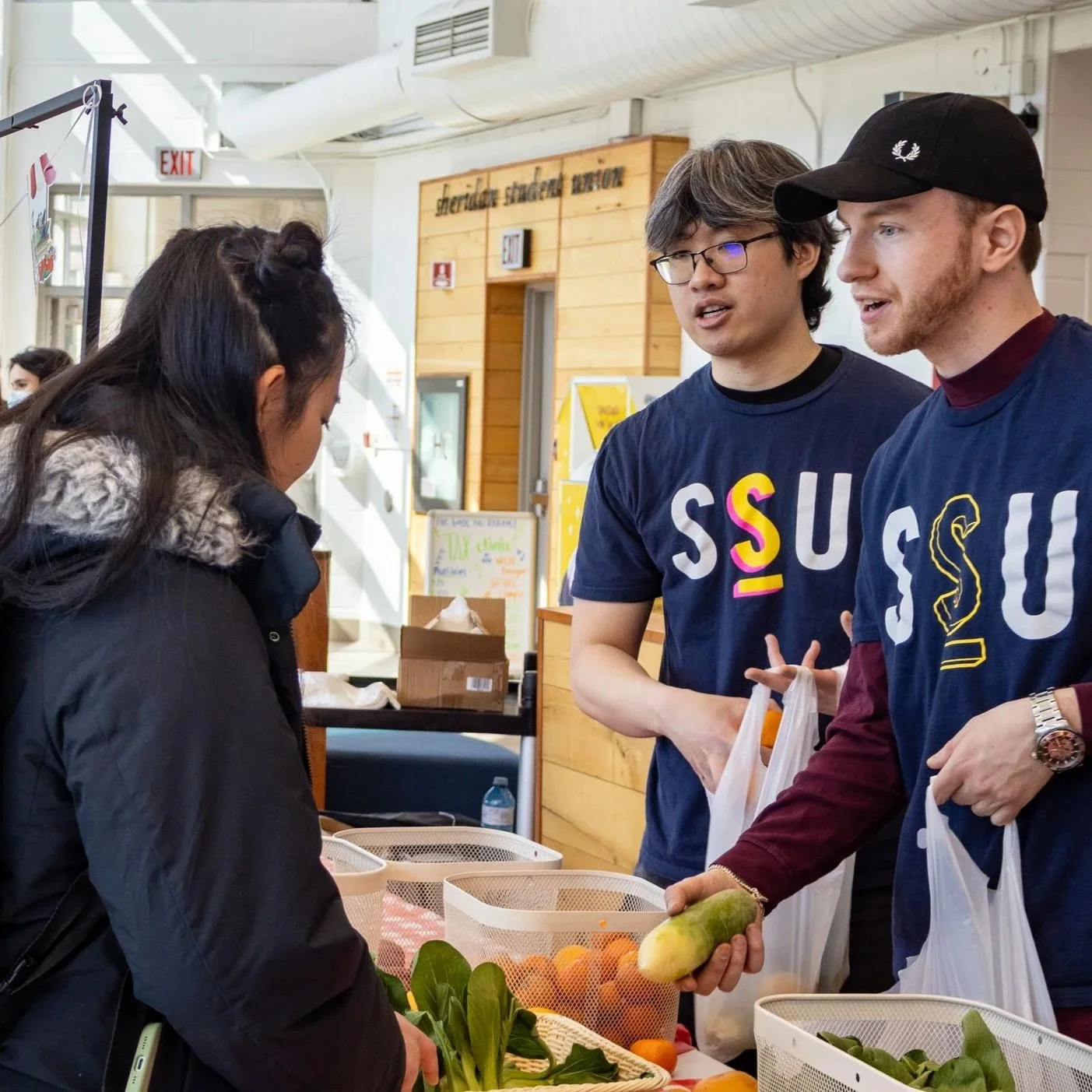

From tacos and arepas to brigadeiros and mofongo, Latin American cuisine is filled with dishes that bring people together and tell stories of culture, tradition, and heritage. In celebration of Latin American Heritage Month, explore some of my favourite dishes and discover the flavours that have been enjoyed and passed down through generations 🌮